
BTS Vehicle Maintenance
Option A: Passenger Cars
2-year apprenticeship | RNCP38367
The Advanced Technician's Certificate in Vehicle Maintenance qualifies graduates for careers in the after-sales service sector for passenger cars, commercial vehicles, and motorcycles.
The incumbent is responsible for:
– technical skills in various aspects of maintenance;
– organizational and management skills;
– computer skills for communication purposes and for using specialized software;
– skills in internal communication (teamwork) and external communication (customer relations, technical support platform);
– sales skills;
in compliance with both technical and environmental regulations, while ensuring the quality of after-sales service.
Activities covered:
– Conducting a comprehensive diagnostic assessment independently in the workshop, and as needed in coordination with the customer, the technical support team, service providers, and the parts department.
– Performing complex maintenance and repair tasks independently in the workshop, and as needed in coordination with the customer, the technical support team, service providers, and the spare parts department.
– Coordinating vehicle maintenance and repairs in the workshop.
– Customer service at the reception area, assisting customers with their vehicles, over the phone, and at the vehicle return area.
– Compliance with both technical and environmental regulations.
– Providing high-quality customer service.
Find all the official information on France Compétences
Target Audience & Prerequisites
- A person under the age of 30
- Employee
- Employee undergoing retraining
- Job seeker
Meets one of the criteria:
BAC STI in Mechanical Engineering (Option B), STI in Electrical Engineering, STI in General Mechanical Engineering, BAC S, or BAC PRO in Automotive Maintenance; or proof of 3 years of professional experience in the relevant field.
Terms of Access
ACADEMIC: Preliminary admission following approval of the PARCOURSUP application in accordance with the prerequisites specified on the platform; final admission upon signing the apprenticeship or vocational training contract.
EMPLOYEE/JOB SEEKER: Following an individual interview, verification of prerequisites, and an assessment of funding options.
The school year begins in September of each year.
The program remains open for enrollment throughout the year on a placement basis, subject to review of the applicant’s academic record.
In-person training is available to people with disabilities following an individual assessment of the necessary accommodations. Disability Coordinator: Ms. CHIPIER, 0477505100
This program is also available in a modified and/or streamlined format for those who hold an equivalent degree in another field.
Duration and cost of the training *
Apprenticeship Training
- Duration:2 years │ 675 hours of training per year
- Work-study program: 2 weeks at a company | 2 weeks at a training center
- Cost: €9,688 covered by OPCO. Cost to the apprentice: €0
Estimated duration and work-study schedule, which can be adjusted based on the company’s needs and the learner’s prerequisites.
Career paths, professions, jobs
Business sectors:
- after-sales services provided by manufacturers' or equipment suppliers' networks
- after-sales services provided by independent companies or networks of independent service providers
- vehicle fleet maintenance services (passenger cars, commercial vehicles)
- maintenance services for large vehicle fleets (such as transport companies).
Types of jobs available:
- diagnostic and maintenance technician
- after-sales service representative
- technical advisor
- workshop team leader
- manufacturer or supplier support platforms
Further Education and Specialization
Professional Bachelor's Degree in Mechanical Engineering with a specialization in Competition Vehicle Development:
- University of Le Mans:
- Offers a Professional Bachelor's Degree in Maintenance and Technology: Multidisciplinary Systems, with a specialization in Competition Vehicle Development1.
- School of Performance in Nogaro:
To become a certified automotive expert, you must obtain the State Diploma for Automotive Experts (DEA):
- GARAC – The National School of Automotive Professions in Argenteuil:
- National Institute of Automotive Trades (INMA):
- University of Bordeaux:
- University of Lille:
Professional Bachelor's Degree in Technical Sales of Industrial Products and Services: Work-study program with an apprenticeship contract.
Professional Bachelor's Degree in Automotive Services Organization and Management (OMSA):
- GARAC – The National School of Automotive Professions:
- Located in Argenteuil, this school is a leader in the automotive field and offers the OMSA Professional Bachelor's Degree1.
- Grenoble University Institute ofTechnology:
- Offers the OMSA Professional Bachelor's Degree with specialized modules in automotive service management2.
- Gustave Eiffel University(Institut Francilien des Sciences Appliquées):
- Bordeaux University Institute of Technology – Bordeaux-Gradignan Campus:
Professional Bachelor's Degree in Health Sciences and Technology, Major: Maintenance of Multidisciplinary Systems, Specialization: Advanced Technologies Applied to Vehicles:
- University of Paris-Est Créteil (UPEC):
- Offers a Professional Bachelor's Degree in Maintenance and Technology: Multidisciplinary Systems, with a track in Advanced Maintenance Techniques1.
- Clermont Auvergne University:
- Offers a Professional Bachelor's Degree in Maintenance and Technology: Multidisciplinary Systems, with specialized modules in advanced technologies2.
- University of Lille:
Other Professional Bachelor's Degrees
- University of Orléans:
- Professional Bachelor's Degree in Mechanical Engineering: Design, Optimization, and Testing of Powertrain and Automotive Systems (COESMA)1.
- Nantes University Institute ofTechnology:
- Professional Bachelor's Degree in Product and Process Engineering (I2P), which includes courses on the design and testing ofmechanicalsystems2.
- Le Mans University of Technology:
Arts et Métiers, an engineering school specializing in Mechanical Engineering, Energy Engineering, Materials Science, and Mechatronics:
Program:
General Education:
– Mathematics
– Physical Sciences
– English
– General Culture and Expression
Technical Education:
– Systems Analysis and Performance Monitoring
– Diagnostics
– Implementation
– Organization
– Communication
Teaching and technical resources:
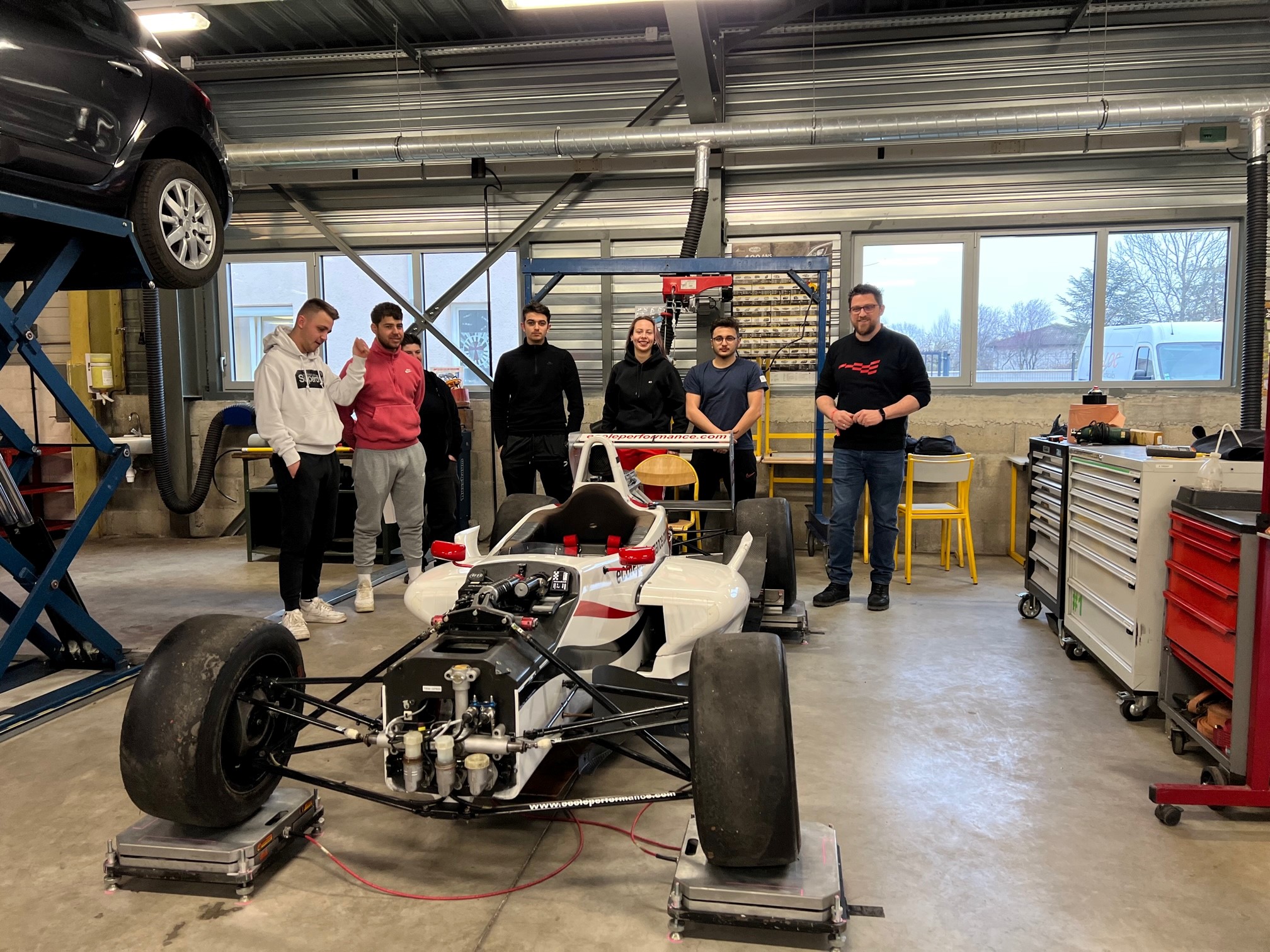
The training takes place in our technical workshops dedicated to the automotive industry.
Providing educational materials, conducting case studies, role-playing exercises, and hands-on activities.
Theory classes are held in general-purpose classrooms. Professional automotive maintenance software: Atelier Doc, Atelier Chiffrage…
Vocational training takes place in technical workshops equipped with specialized equipment and tools for vehicle maintenance (scissor lifts, toolboxes, air extractors, rolling jacks, tire changers, wheel balancers, diagnostic tools – (KTS BOSH/CLIPS RENAULT/DMS PEUGEOT), front-end alignment equipment.
A computer lab equipped with 14 computers is available for conducting technological research.
A "traditional" classroom is also used whenever necessary.
Assessment Criteria
Learning outcomes are assessed through theoretical and practical assessments throughout the training program, and a progress report is compiled.
The final assessment is a theoretical and practical exam taken at the end of the second year, leading to the award of the Brevet de Technicien Supérieur.
Each competency module is certified and involves an assessment and validation. Successful completion of all modules leads to the award of the Brevet de Technicien Supérieur.
Success indicators for the class of 2023–2024:
| Number of participants | 12 |
| Exam Success Stories | 71,4% |
| Failures Exam |
2 |
| Withdrawals during training | 5 |
| Integration into the workforce | 2 |
| Further education | 0 |
Overall satisfaction among BTS students across the entire training center:
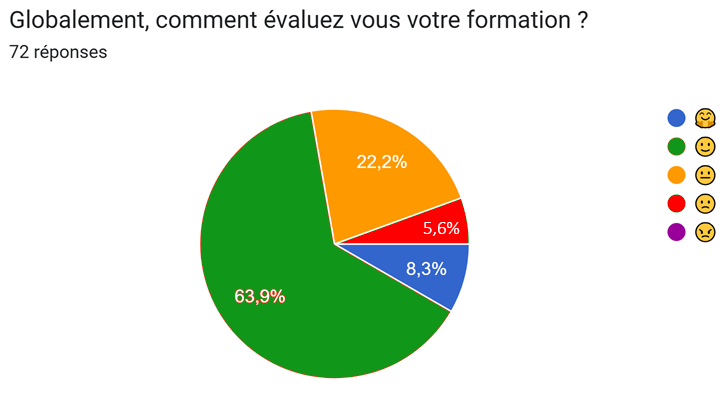
Find all the performance metrics for our training programs on the INSERJEUNES website
Located in Sury-le-Comtal, in the heart of the Forez Plain and within an employment area that aligns with the training programs offered there, the CFA Sainte-Claire is easily accessible from throughout the Auvergne-Rhône-Alpes region thanks to the Loire’s extensive intercity transportation network.
You will complete your training in a 4,500-square-meter facility equipped with state-of-the-art technical training spaces. The CFA also features a dormitory with 84 beds that can accommodate students from all over France, as well as a self-service cafeteria offering breakfast, lunch, and dinner.
Skills and Assessment Methods
RNCP38367BC01 – Systems Analysis and Performance Monitoring
| List of skills | Assessment Criteria |
|---|---|
|
Describe how a system works |
Students (public or private schools under contract), Apprentices (accredited vocational training centers or apprenticeship programs), Continuing vocational education (accredited public institutions). Written notice
Continuing vocational education (public institutions authorized to offer the full CCF program for this BTS). Written notice
School students (private schools not under contract), Apprentices (CFA or non-accredited apprenticeship programs), Continuing vocational training (non-accredited institutions), Based on professional experience, Distance learning. Written notice |
RNCP38367BC02 – Service Management – Customer Relations
| List of skills | Assessment Criteria |
|---|---|
|
Propose cost-effective solutions |
Students (public or private schools under contract), Apprentices (accredited vocational training centers or apprenticeship programs), Continuing vocational education (accredited public institutions). CCF 1 Assessment Situation
Continuing vocational education (public institutions authorized to offer the full CCF program for this BTS). CCF 1 Assessment Situation
School students (private schools not under contract), Apprentices (CFA or non-accredited apprenticeship programs), Continuing vocational training (non-accredited institutions), Based on professional experience, Distance learning. Oral exam |
RNCP38367BC03 – Vehicle Service
| List of skills | Assessment Criteria |
|---|---|
|
Verify the malfunction |
Students (public or private schools under contract), Apprentices (accredited vocational training centers or apprenticeship programs), Continuing vocational education (accredited public institutions). CCF 1 Assessment Situation
Continuing vocational education (public institutions authorized to offer the full CCF program for this BTS). CCF 1 Assessment Situation
School students (private schools not under contract), Apprentices (CFA or non-accredited apprenticeship programs), Continuing vocational training (non-accredited institutions), Based on professional experience, Distance learning. Practical and timely |
RNCP38367BC04 – Business Knowledge
| List of skills | Assessment Criteria |
|---|---|
|
Manage the equipment needed for service calls |
Students (public or private schools under contract), Apprentices (accredited vocational training centers or apprenticeship programs), Continuing vocational education (accredited public institutions). Oral exam
Continuing vocational education (public institutions authorized to offer the full CCF program for this BTS). CCF 1 Assessment Situation
School students (private schools not under contract), Apprentices (CFA or non-accredited apprenticeship programs), Continuing vocational training (non-accredited institutions), Based on professional experience, Distance learning. Oral exam |
RNCP38367BC05 – Measurement and Analysis
| List of skills | Assessment Criteria |
|---|---|
|
Perform measurements and tests |
Students (public or private schools under contract), Apprentices (accredited vocational training centers or apprenticeship programs), Continuing vocational education (accredited public institutions). Oral exam
Continuing vocational education (public institutions authorized to offer the full CCF program for this BTS). CCF 1 Assessment Situation
School students (private schools not under contract), Apprentices (CFA or non-accredited apprenticeship programs), Continuing vocational training (non-accredited institutions), Based on professional experience, Distance learning. Oral exam |
Description of the procedures for obtaining certification through the accumulation of skill modules and/or through distance learning:
The assessment framework is organized into units that together form a coherent set of skills and knowledge aligned with the program’s objectives. It may include units that are optional. Each unit corresponds to a set of skills and an assessment.
Candidates register for the diploma exam. Those who have prepared for the diploma through continuing professional education or the recognition of prior learning automatically receive, for the diploma units in which they earned a grade of 10 out of 20 or higher or for which prior learning was recognized, a certificate recognizing the acquisition of the competencies comprising these diploma units, and thus the corresponding competency blocks. Those who have prepared for the diploma through another pathway receive this certificate upon request.
The diploma is awarded to candidates who achieve an average score of at least 10 out of 20 on all exams. Candidates who have already completed certain skill modules may be exempt from the corresponding exams.