
PROFESSIONAL CERTIFICATE Advanced Industrial Maintenance Technician | rncp36247
The responsibilities of a senior technician fall into three main categories, reflecting the nature of the organization and the structure of the position:
-
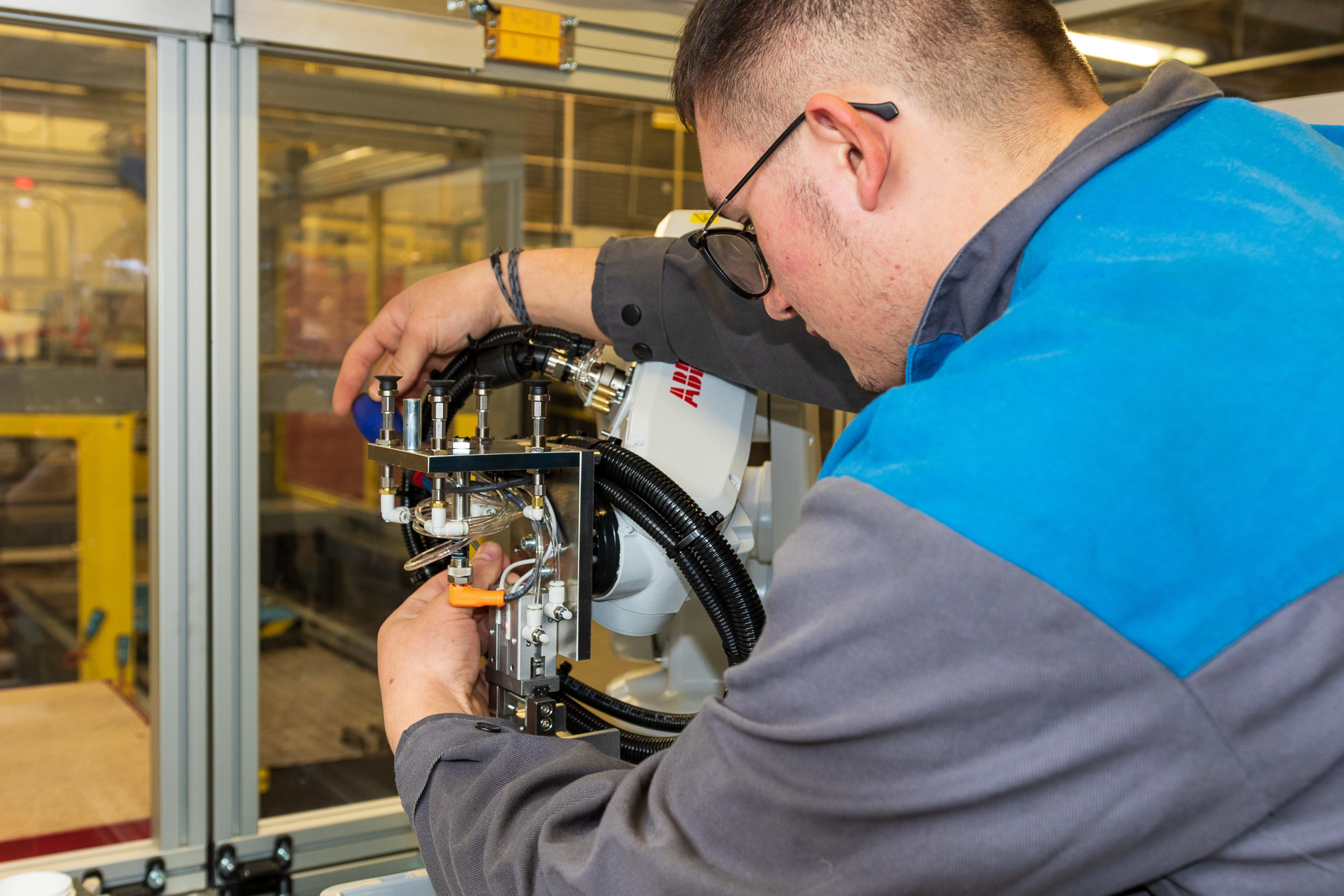
technical work on multi-technology industrial facilities during operation: he performs preventive maintenance to prevent the occurrence of failures, corrective maintenance to restore a malfunctioning machine to its original operating condition, and predictive maintenance, which involves analyzing a facility’s operating parameters to detect deviations and anomalies;
-
maintenance planning and management: in line with the company’s strategy, the individual defines maintenance operations and then organizes their implementation and follow-up. This planning takes into account any disabilities employees may have;
-
Technical and organizational improvements: He identifies, evaluates, and implements projects designed to improve the reliability, maintainability, availability, and security of assets. He verifies the effectiveness of the actions taken.
Depending on the size of the company and its maintenance policy, the employee is assigned to one or more of these activities and works independently in one or more technological fields. He or she works alone or as part of a team for which he or she may be responsible. He or she implements risk prevention measures for his or her own work and that of the people under his or her supervision. In this context, they must hold the necessary certifications required for the position, such as the BR electrical certification. They incorporate the principles of sustainable development in effect at their company into their work.
Within the maintenance department, he works primarily in collaboration with the production department, as well as with the design, process engineering, and purchasing departments. He may also travel to perform work at sites belonging to external clients. For technical interventions, the senior maintenance technician works directly on the equipment. The repair of subassemblies is carried out in the maintenance workshop. The management and organization of service calls, as well as the design of improvements, are carried out in the office. The senior maintenance technician adapts to the specific safety requirements of industrial sites. This job often involves on-call duties, including night shifts, weekends, and holidays.

Find all the official information on France Compétences
Target Audience & Prerequisites
– Open to all applicants
– Holder of a Level IV diploma (high school diploma)
– Professional experience in industry or in industrial equipment maintenance is preferred
Terms of Access
Submission of a cost estimate to the funding agency following attendance at a group information session and an individual assessment interview to verify eligibility requirements.
Final admission is subject to approval by the referring institution/funding body; please allow 1 to 2 months before the start of the program.
The course is available as a continuing education program.
Next session scheduled: March 2025
To find out the dates of the next group information session for the upcoming term, please contact us at 0477505102.
Training courses are accessible to people with disabilities following a feasibility study of the necessary accommodations.
Disability Coordinator: Ms. CHIPIER 0477505100
Duration and cost of the training *
Work-study program
- Duration: Up to 945 hours at a training center
- Internships: 245 hours
- Cost: €9,450 per person for a group of 12 people. Funding may be available through the CPF or other funding sources (OPCO, regional government, etc.). Custom quotes available upon request.
*Estimated duration and work-study schedule, subject to adjustment based on the company’s needs and the student’s prerequisites.
Career paths, professions, jobs
Business sectors:
Metallurgy, food processing, pharmaceuticals, plastics, automotive, chemicals, nuclear power, wind power, air transport, rail and cable transport, healthcare, leisure, and temporary staffing.
Types of jobs available:
– industrial maintenance technician, production/manufacturing equipment maintenance technician, electrical technician, electromechanical technician, mechanic, or automation technician;
– maintenance methods technician, industrial maintenance supervisor, or team leader.
Key Metrics for the 2024 Sessions
| Number of participants | 7 |
| Exam Success Stories | 4 |
| Failures Exam |
3 |
| Withdrawals during the race | 0 |
| Success rate |
57,14% |
| Learners' overall satisfaction with the training | 4.2/5 (7 reviews) |
Proven skills:
- Perform maintenance on the electromechanical and automation components of industrial facilities
- Perform preventive, corrective, and predictive maintenance on electromechanical and pneumatic components
- Perform preventive, corrective, and predictive maintenance on automation and control system components
2. Perform maintenance on the mechanical and hydraulic components of industrial systems
- Perform preventive, corrective, and predictive maintenance on mechanical components
- Perform preventive, corrective, and predictive maintenance on hydraulic components
3. Organize and manage the maintenance of industrial facilities
- Develop a maintenance plan and prepare the related documentation
- Lead a team and coordinate the implementation of maintenance activities
- Enter data into and use a computer-aided maintenance management software system (CMMS)
4. Plan and carry out an improvement maintenance project
- Research and design an improvement maintenance project
- Organize and implement an improvement maintenance project
Teaching and technical resources:
The training is provided by CFC instructors and teachers from the Sainte-Claire vocational high school in the school’s technical facilities.
The course content complies with the training guidelines, which are available at the training center.
Technical platforms:
Mechanical systems, automated systems, packaging lines with or without robots (for pharmaceuticals, soap, liquids, etc.), production lines, CMMS and supervisory software, custom wiring stations, custom assembly stations: electrical engineering, power electronics, mechanical engineering, pneumatics, hydraulics, and automation.
Located in Sury-le-Comtal, in the heart of the Forez Plain and within an employment area that aligns with the training programs offered there, the CFC Sainte-Claire is easily accessible from throughout the Auvergne-Rhône-Alpes region thanks to the Loire’s extensive intercity transportation network.
You will complete your training in a 4,500-square-meter facility equipped with state-of-the-art technical labs for vocational instruction. The CFC also features a dormitory with 84 beds that can accommodate students from all over France, as well as a self-service and cafeteria-style dining service offering breakfast, lunch, and dinner.
Demonstrated competencies and assessment methods:
RNCP36247BC01 – Perform maintenance on electromechanical and automation components of industrial systems
| List of skills | Assessment Criteria |
|---|---|
|
Perform preventive, corrective, and predictive maintenance on electromechanical and pneumatic components Perform preventive, corrective, and predictive maintenance on automation and control system components |
Work-based scenario: 2 hours 0 minutes The professional placement consists of three phases: Phase 1 – Duration: 45 minutes, in the presence of the jury: Based on a service request, the candidate diagnoses a malfunction in multi-technology automated industrial equipment. The malfunction involves one of the following technological areas: electromechanics, pneumatics, automation, or control systems. The candidate identifies the repair procedures and the conditions required for the equipment to operate in accordance with the specifications. Phase 2 – Duration: 45 minutes, in the presence of a proctor: The candidate uses a computer program to complete a detailed report describing their analysis and diagnostic process. Phase 3 – Duration: 30 minutes, in the presence of the jury: Based on a service request, the candidate adjusts the settings of a networked sensor system installed on multi-technology equipment. The candidate verifies the results of the adjustment. Career questionnaire: 00:30 The professional questionnaire complements the work-based scenario and helps assess the knowledge associated with the targeted competencies. The candidate answers in writing in the presence of an exam proctor. Total duration of the exam for the candidate: 2 hours 30 minutes |
RNCP36247BC02 – Perform maintenance on mechanical and hydraulic components of industrial systems
| List of skills | Assessment Criteria |
|---|---|
|
Perform preventive, corrective, and predictive maintenance on mechanical components Perform preventive, corrective, and predictive maintenance on hydraulic components |
Work-based scenario: 2 hours 0 minutes The professional placement consists of three phases: Phase 1 – Duration: 45 minutes, in the presence of the jury: Based on a service request, the candidate diagnoses a malfunction in multi-technology automated industrial equipment. The malfunction involves one of the following technological areas: mechanical or hydraulic systems. The candidate identifies the repair procedures and the conditions required for the equipment to operate in accordance with the specifications. Phase 2 – Duration: 45 minutes, in the presence of a proctor: The candidate uses a computer program to complete a detailed report describing their analysis and diagnostic process. Phase 3 – Duration: 30 minutes, in the presence of the jury: Based on a service request, the candidate adjusts the settings of a networked sensor system installed on multi-technology equipment. The candidate verifies the results of the adjustment. Career questionnaire: 00:30 The professional questionnaire complements the work-based scenario and helps assess the knowledge associated with the targeted competencies. The candidate answers in writing in the presence of an exam proctor. Total duration of the exam for the candidate: 2 hours 30 minutes |
RNCP36247BC03 – Organizing and managing the maintenance of industrial facilities
| List of skills | Assessment Criteria |
|---|---|
|
Develop a maintenance plan and prepare the related documentation Lead a team and coordinate the implementation of maintenance activities Enter data into and use a computer-aided maintenance management software system (CMMS) |
Work-based scenario: 4 hours 00 minutes The work-based learning experience consists of two phases: Phase 1 – Written case study – Duration: 2 hours, in the presence of an exam proctor: Using historical data, indicators, and dashboards, the candidate identifies and calculates maintenance costs. The candidate describes and justifies the implementation of a preventive maintenance plan. Phase 2 – Written case study – Duration: 2 hours, in the presence of an exam proctor: In a simulated maintenance scenario, the candidate develops a detailed plan for the operations, incorporating all the resources required to carry them out. Technical interview: 12:30 a.m. The technical interview pertains to Phase 2 of the work simulation, which focuses on the planning of maintenance operations. The panel interviews the candidate and assesses their mastery of the skills required to oversee the work of a maintenance team. Total duration of the exam for the candidate: 4 hours 30 minutes |
RNCP36247BC04 – Plan and implement an improvement maintenance project
| List of skills | Assessment Criteria |
|---|---|
|
Research and design an improvement maintenance project Organize and implement an improvement maintenance project |
Work-based scenario: 3 hours 00 minutes Written case study, under the supervision of an exam proctor: In a simulated setting, the candidate proposes technical improvements to enhance the performance of industrial equipment. He develops the specifications for the improvements and updates the related technical documents. Technical interview: 12:30 a.m. The technical interview relates to the written case study. The candidate presents their proposals to the jury and assesses the expected benefits. Career questionnaire: 00:30 The professional questionnaire complements the work-based scenario and helps assess the knowledge associated with the targeted competencies. The candidate answers in writing in the presence of an exam proctor. Total duration of the exam for the candidate: 4 hours 0 minutes |
Description of the procedures for obtaining certification through the accumulation of skill modules and/or through distance learning:
The professional qualification consists of four skill modules known as Certificates of Professional Competence (CCP), which correspond to the activities listed above.
The professional qualification may be supplemented by one or more skill sets certified by the supplementary specialization certificates (CCS) mentioned above.
This professional certification may be obtained by accumulating professional competency certificates (CCP) or by completing a training program, in accordance with the provisions set forth in the amended decree of December 22, 2015, issued by the Ministry of Labor regarding the conditions for granting professional certifications.
Monitoring procedures:
The program is based on teaching methods that focus on individualized instruction.
We have chosen an educational strategy aimed at:
Developing autonomy by empowering our trainees to take ownership of their learning,
Developing a culture of technology by integrating all components, including those related to workplace safety,
Developing professional attitudes, methods, and rigor.
Course modules and individualized case studies are assessed by the lead instructor through collaborative work in small groups.
Practical training phases are evaluated individually by the lead instructor, who records the results in a skills tracking booklet.
Supervised time during tutorials and practical training sessions is also scheduled to prepare for the certification.
A computer lab is available for preparing the internship and company activity report.