
CAP Vehicle Maintenance, Option A
: Passenger Cars | rncp40997
1st year in the initial track
Apprenticeship available in the 2nd year
The CAP can be pursued through full-time study in the first year and may be continued through full-time study or an apprenticeship in the second year.
The main duties of this technician include:
- perform routine and corrective maintenance
- help diagnose vehicle problems
- pick up and return the vehicle
- help organize maintenance.
In all their work, holders of the Certificate of Professional Competence in Vehicle Maintenance must:
- contribute to the company’s quality and sales initiatives
- comply with the rules of the Health, Safety, and Environment (HSE) management system by ensuring the protection of people’s health and safety, property, and the environment
- comply with deadlines, instructions, and company procedures.
He (she) works in the field of passenger car maintenance
Target Audience & Prerequisites
- Young people aged 16 to 29, or even up to 35, depending on the conditions.
- For students under 15, completion of the Common Core Curriculum.
- Students in the 9th grade, or young people with an equivalent or higher-level diploma.
Terms of Access
Admission is granted following a review of the application and an interview; final admission is confirmed upon signing the apprenticeship or vocational training contract
The program is available throughout the school year, subject to review of the applicant's academic record.
This training is accessible to people with disabilities following an individualized assessment of the necessary accommodations.
This program is also available in a modified and/or streamlined format for those who hold an equivalent degree in another field.
Duration and cost of the training
Initial training:
- Duration:2 years │ 490 hours of training per year
- Internships: 6 weeks
Apprenticeship training:
- Duration:2 years │ 490 hours of training per year
- Work-study program: 1 week at the company | 1 week at the training center
- Cost: €9 ,401 covered by OPCO. Cost to the apprentice: €0
Estimated duration and work-study schedule, which can be adjusted based on the company’s needs and the learner’s prerequisites.
Career paths, professions, jobs
Business sectors:
Holders of the Certificate of Professional Competence in Vehicle Maintenance (MV) are expected to perform their duties across all areas of vehicle maintenance:
- in companies that rely on manufacturers' networks
- at companies that service vehicles of all makes
- in the maintenance departments of transportation companies
- in vehicle fleet maintenance services.
Types of jobs available:
- automotive mechanic, roadside assistance technician, garage mechanic.
Success indicators:
| Number of participants | 10 |
| Exam Success Stories | 8 |
| Failures Exam |
2 |
| Withdrawals during the race | 0 |
| Transition to the workforce after completing a training program | NC |
Find all the performance metrics for our training programs on the INSERJEUNES website
Located in Sury-le-Comtal, in the heart of the Forez Plain and within an employment area that aligns with the training programs offered there, the CFA Sainte-Claire is easily accessible from throughout the Auvergne-Rhône-Alpes region thanks to the Loire’s extensive intercity transportation network.
You will complete your training in a 4,500-square-meter facility equipped with state-of-the-art technical training spaces. The CFA also features a dormitory with 84 beds that can accommodate students from all over France, as well as a self-service cafeteria offering breakfast, lunch, and dinner.
Program:
Professional Skills Modules Module 1: Preparing for a Maintenance Task
Vehicle Knowledge
Maintenance Planning
Vehicle Check-in and Check-out
Diagnostics
Safety, Health, and Environment
Module 2: Performing vehicle repairs
The powertrain system
The transmission system
The braking system
The suspension system
The body and interior trim system
The electrical and control systems
The comfort and safety system
The emissions system
General Education Modules
Module 1: French – History and Geography – Ethics and Civics
►Engaging in spoken conversation: listening, responding, and expressing oneself
►Engaging in written communication: reading, analyzing, writing
►Become a skilled and critical reader
►Bringing together knowledge and values to build one's cultural identity
►Understanding the diversity of societies and the richness of cultures
►Identify the situation under study in terms of time and place
►Identify, organize, and prioritize the information contained in a document according to specified criteria
►Develop a sense of civic responsibility based on one’s everyday environment
Block 2: Mathematics – Physics and Chemistry
► Search for, retrieve, and organize information
► Propose, select, and implement a solution method
► Experiment
► Criticize a result with supporting arguments
► Report on a process
Teaching and technical resources:
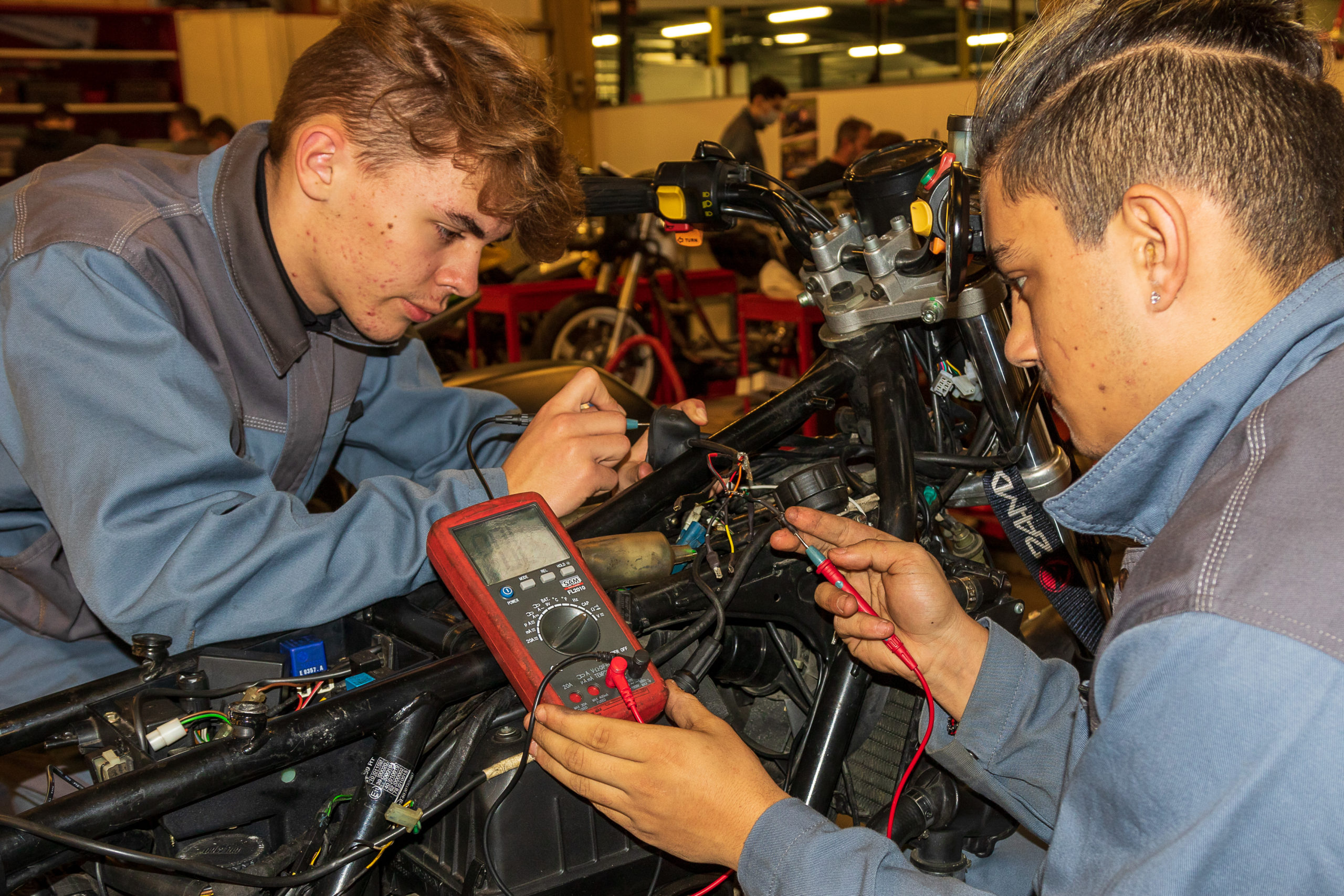
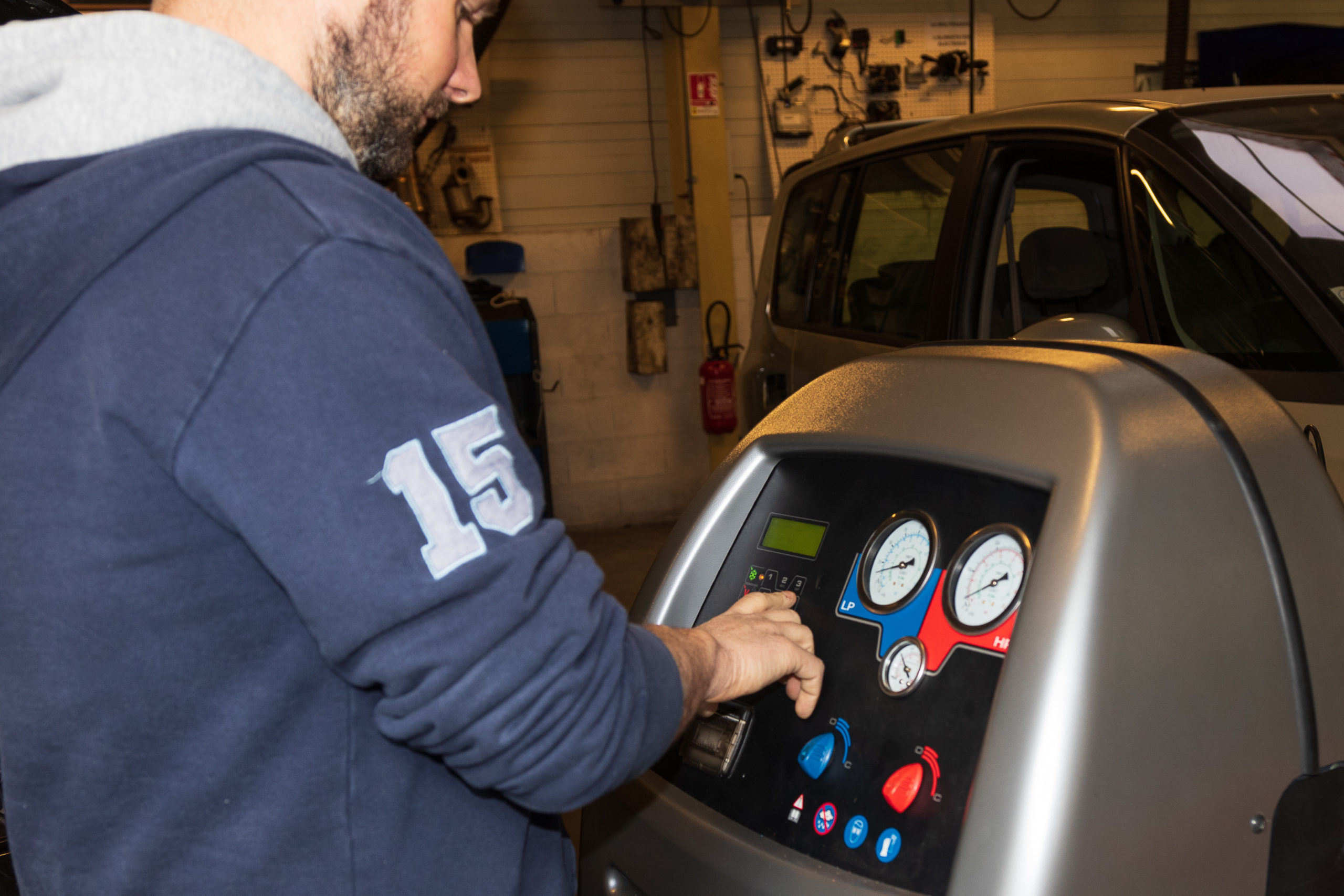
The training takes place in our technical workshops dedicated to the automotive industry.
Providing educational materials, conducting case studies, role-playing exercises, and hands-on activities
Classroom instruction takes place in standard classrooms. Professional automotive maintenance software: Atelier Doc, Atelier Chiffrage…
Vocational courses are held in technical workshops equipped with specialized equipment and tools for vehicle maintenance (scissor lifts, toolboxes, air compressors, mobile jacks, tire changers, wheel balancers, diagnostic tools – (KTS BOSCH/CLIPS RENAULT/DMS PEUGEOT), and front-end alignment equipment.
A computer lab equipped with 14 computers is available for conducting technological research.
A "traditional" classroom is also used whenever necessary.
Assessment Criteria
Learning outcomes are assessed throughout the training program and are documented in a skills log.
The satisfaction survey is conducted at the end of the program
The diploma is awarded upon successful completion of the CAP exams at the end of the senior year.
Monitoring procedures:
The program is based on teaching methods that focus on individualized instruction.
We have chosen an educational strategy aimed at:
Tailor learning paths by offering each individual a personalized program,
Foster independence by empowering our trainees to take ownership of their learning,
Develop a culture of technology by integrating all components, including those related to workplace safety,
Cultivate professional attitudes, methods, and rigor.
Course modules and individualized case studies are validated by the lead instructor through collaborative work in small groups.
Practical training sessions are evaluated individually by the lead instructor, who records the results in a skills portfolio.
Supervised sessions for tutorials and practical work are also scheduled to prepare for the certification.
A computer lab is available for preparing the internship and workplace activity report, which is required to pass the CAP MV.