
Supplementary Certificate to the CAP Maintenance of Embedded Automotive Systems | rncp2807
1 year in an educational institution
The complementary certificate is a credential issued by the Ministry of Education.
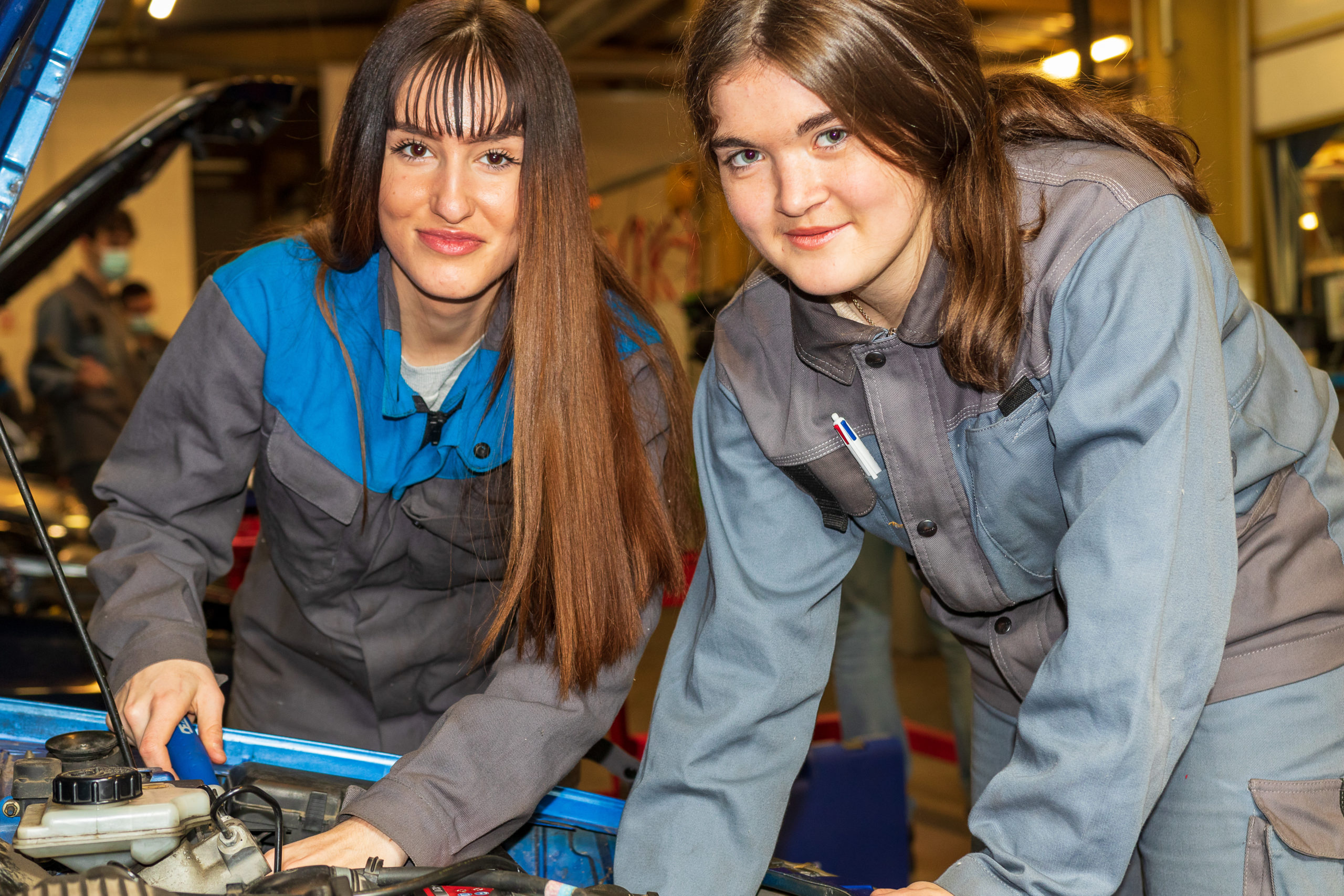
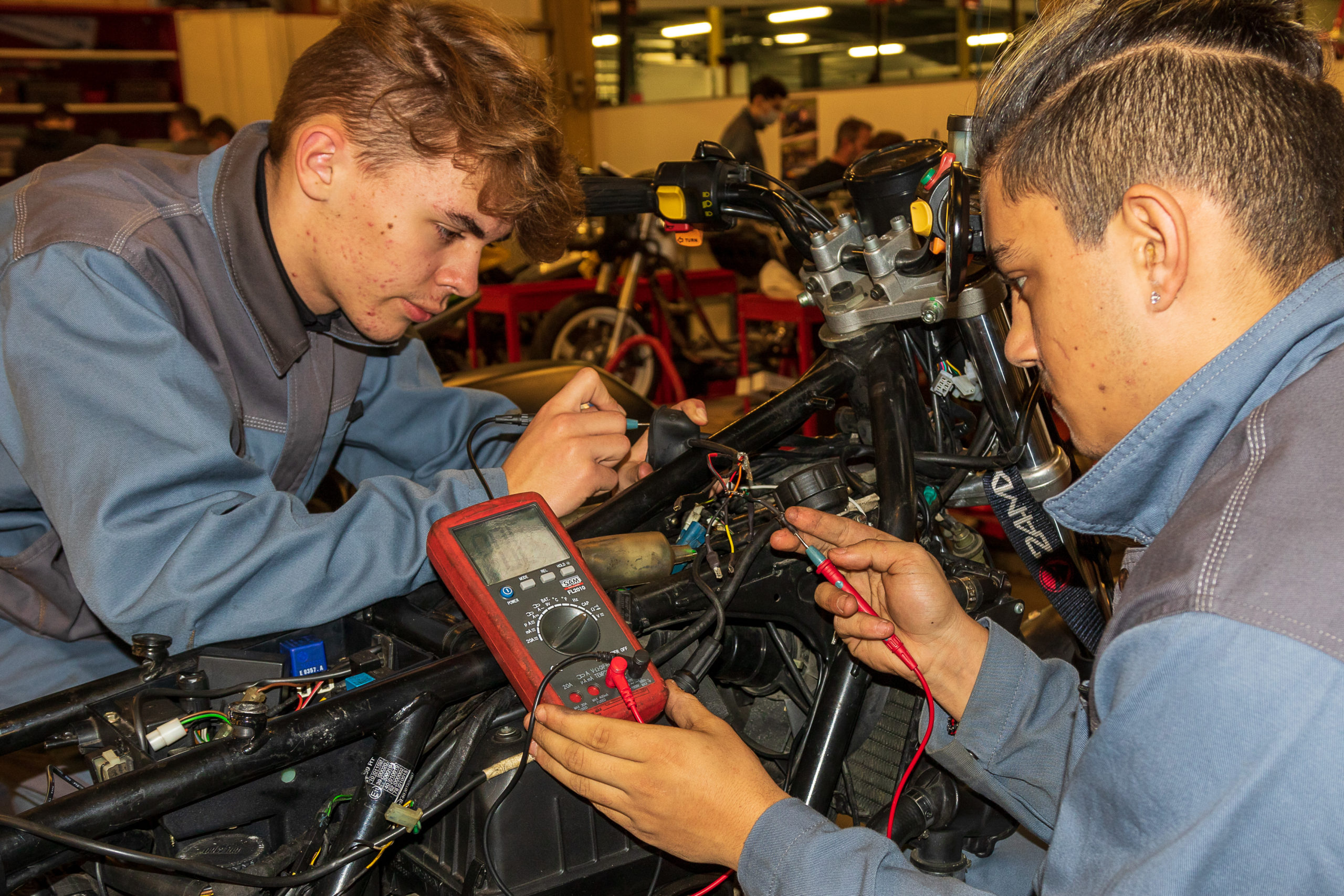
Holders of this CAP-level vocational certificate work, depending on their chosen specialty, in the fields of passenger cars, commercial vehicles, or motorcycles. They greet customers and handle vehicle inspections, diagnostics, maintenance, and return.
This professional performs routine maintenance on vehicles equipped with the latest technology. He or she conducts simple diagnostics and adjustments, and resets and reconfigures onboard electronic and computer systems. In addition, he or she communicates with customers and supervisors.
Graduates may work at a maintenance company that is part of a manufacturer’s network or that services vehicles of all makes, or within the maintenance department of a transportation or car rental company.
Target Audience & Prerequisites
The complementary qualification is a one-year specialization program that can be pursued after completing a two-year vocational training program in the field of maintenance: either a CAP or a CQP (Certificate of Professional Qualification).
- CAP Electrician
- CAP Equipment Maintenance, Option A: Agricultural Equipment
- CAP in Equipment Maintenance, Option C: Landscaping Equipment
- CAP in Vehicle Maintenance, Option A: Passenger Cars
- CAP in Vehicle Maintenance, Option B: Road Transport Vehicles
- CAP in Vehicle Maintenance, Option C: Motorcycles
Program:
The curriculum and educational objectives are in line with the National Education Standards.
- Functional and structural analysis,
- Automated systems management,
- Technical features: powertrain, transmission, suspension, braking, comfort, and safety,
- Quality,
- Customer Service,
- Occupational Safety and Health.
Duration and cost of the training
Initial training:
- Duration: 1 year │ 490 hours of training per year
Estimated duration and work-study schedule, which can be adjusted based on the company’s needs and the learner’s prerequisites.
Terms of Access
Admission is granted following a review of the application and an interview.
The program is available throughout the school year, subject to review of the applicant's academic record.
This training is accessible to people with disabilities following an individualized assessment of the necessary accommodations.
This program is also available in a modified and/or streamlined format for those who hold an equivalent degree in another field.
Monitoring procedures:
The program is based on teaching methods that focus on individualized instruction.
We have chosen an educational strategy aimed at:
Tailor learning paths by offering each individual a personalized program,
Foster independence by empowering our trainees to take ownership of their learning,
Develop a culture of technology by integrating all components, including those related to workplace safety,
Cultivate professional attitudes, methods, and rigor.
Course modules and individualized case studies are validated by the lead instructor through collaborative work in small groups.
Practical training sessions are evaluated individually by the lead instructor, who records the results in a skills portfolio.
Supervised sessions for tutorials and practical work are also scheduled to prepare for the certification.
A computer lab is available for preparing the internship and company activity report, which is required for graduation.
Assessment Criteria
Learning outcomes are assessed throughout the training program and are documented in a skills log.
The satisfaction survey is conducted at the end of the program
Graduation is contingent upon passing the final exams for the Additional Specialization at the end of the year.
Teaching and technical resources:
The training takes place in our technical workshops dedicated to the automotive industry.
Providing educational materials, conducting case studies, role-playing exercises, and hands-on activities
Theory classes are held in general-purpose classrooms. Professional automotive maintenance software: Atelier Doc, Atelier Chiffrage…
Vocational training takes place in technical workshops equipped with specialized equipment and tools for vehicle maintenance (scissor lifts, toolboxes, air extractors, rolling jacks, tire changers, wheel balancers, diagnostic tools – (KTS BOSH/CLIPS RENAULT/DMS PEUGEOT), front-end alignment equipment.
A computer lab equipped with 14 computers is available for conducting technological research.
A "traditional" classroom is also used whenever necessary.
Career paths, professions, jobs
Business sectors:
Holders of the CAP and MC MSEA certifications work in all sectors of passenger car maintenance
Types of jobs available:
auto mechanic, garage owner, vehicle inspector, tuner
Further education:
The specialized track in Embedded Systems Maintenance, with a focus on passenger vehicles, provides a direct pathway to employment.
Students may also choose to continue their studies toward a vocational baccalaureate, an additional specialization, or a Certificate of Professional Qualification (CQP).
Gaining professional experience or continuing your education will enable you to transition into other careers.