
PROFESSIONAL CERTIFICATE Commercial Refrigeration and Air Conditioning Service Technician | rncp218
Commercial refrigeration and air conditioning service technicians perform preventive and corrective maintenance, as well as energy optimization, on complex, centralized commercial refrigeration systems, such as central refrigeration plants, CO₂ cascade or booster systems, and refrigeration units with secondary cooling circuits for large and medium-sized retail spaces and small-scale industrial processes.
Depending on the type of business, he performs commissioning and maintenance of single-stage, single-unit refrigeration systems, such as small walk-in coolers, refrigerated display cases, refrigerated cabinets, small-capacity heat pumps, and reversible air conditioning systems.
He often works alone and travels to job sites in a service vehicle equipped with specialized equipment and tools. The technician performs his duties by referring to the manufacturers’ technical documentation, the installation records, and the information provided by the building management system (BMS), if one is in place.
He works with several people: his supervisor, who assigns him tasks, monitors his work, and approves his decisions; and the client, to whom he reports on the work completed and has the relevant documents signed. He may be subject to specific time constraints and on-call duties.
The technician is exposed to risks associated with on-site work: electrical hazards, material handling, working at heights, working in cold temperatures, and using welding equipment.
With regard to refrigerants, the worker is exposed to hazards associated with their use, particularly CO2 (due to the risk of oxygen deprivation) and certain flammable refrigerants such as hydrocarbons, as well as refrigerants with very low environmental impact. Finally, the worker handles equipment that poses risks due to high pressures.
He performs his duties in compliance with individual and collective safety rules and, where applicable, in accordance with the prevention plan, environmental protection rules regarding refrigerants, and regulations governing pressure equipment.
Target Audience & Prerequisites
– First-grade levelfirst science or technical track.
– CAP/BEP in electrical work or refrigeration, or alevel V (air conditioning installer–refrigeration technician, industrial electrician) with at least one year of experience in the field.
Proven skills:
1. Commission single-stage, single-unit refrigeration systems
Install a single-stage, single-unit refrigeration system.
Commission a single-stage, single-unit refrigeration system.
2. Perform maintenance on single-stage, single-unit refrigeration and air conditioning systems
Check and configure a controller or interface dedicated to refrigeration applications.
Perform corrective maintenance on a single-stage, single-unit refrigeration and air conditioning system.
Perform preventive maintenance on a single-stage, single-unit refrigeration and air conditioning system.
3. Perform preventive maintenance on complex, centralized commercial refrigeration systems
Perform routine maintenance on complex, centralized commercial refrigeration systems.
Perform condition-based and predictive maintenance on complex, centralized commercial refrigeration systems.
4. Perform corrective maintenance on complex and centralized commercial refrigeration systems
Diagnose the causes of malfunctions in complex and centralized commercial refrigeration systems using a Centralized Technical Management (CTM) system.
Diagnose the causes of malfunctions in complex and centralized commercial refrigeration systems.
Repair and return complex and centralized commercial refrigeration systems to service.
Duration and cost of the training *
Continuing Education Program
- Duration:732 hours at a training center
- Internships: 140 hours
Estimated duration and work-study schedule, which can be adjusted based on the company’s needs and the learner’s prerequisites.
Terms of Access
Admission following a placement interview and review of the application materials.
Training is available to people with disabilities following an individualized assessment of the necessary accommodations.
Assessment Criteria
A pre-training assessment is conducted prior to the program. It allows us to assess needs, verify prerequisites, and tailor the training to each participant’s specific requirements.
Learning outcomes are assessed throughout the training program and are documented in a skills log.
The final evaluation is conducted by the certification board authorized by the relevant regional representative of the Ministry of Labor. The board is composed of professionals in the field covered by the certification. (Art. R 338-6 of the Education Code)
Full certification (all competency modules approved by the panel) or partial certification (certain modules approved), followed by the issuance of a professional credential or a certificate of completion for the approved modules.
Teaching and technical resources:
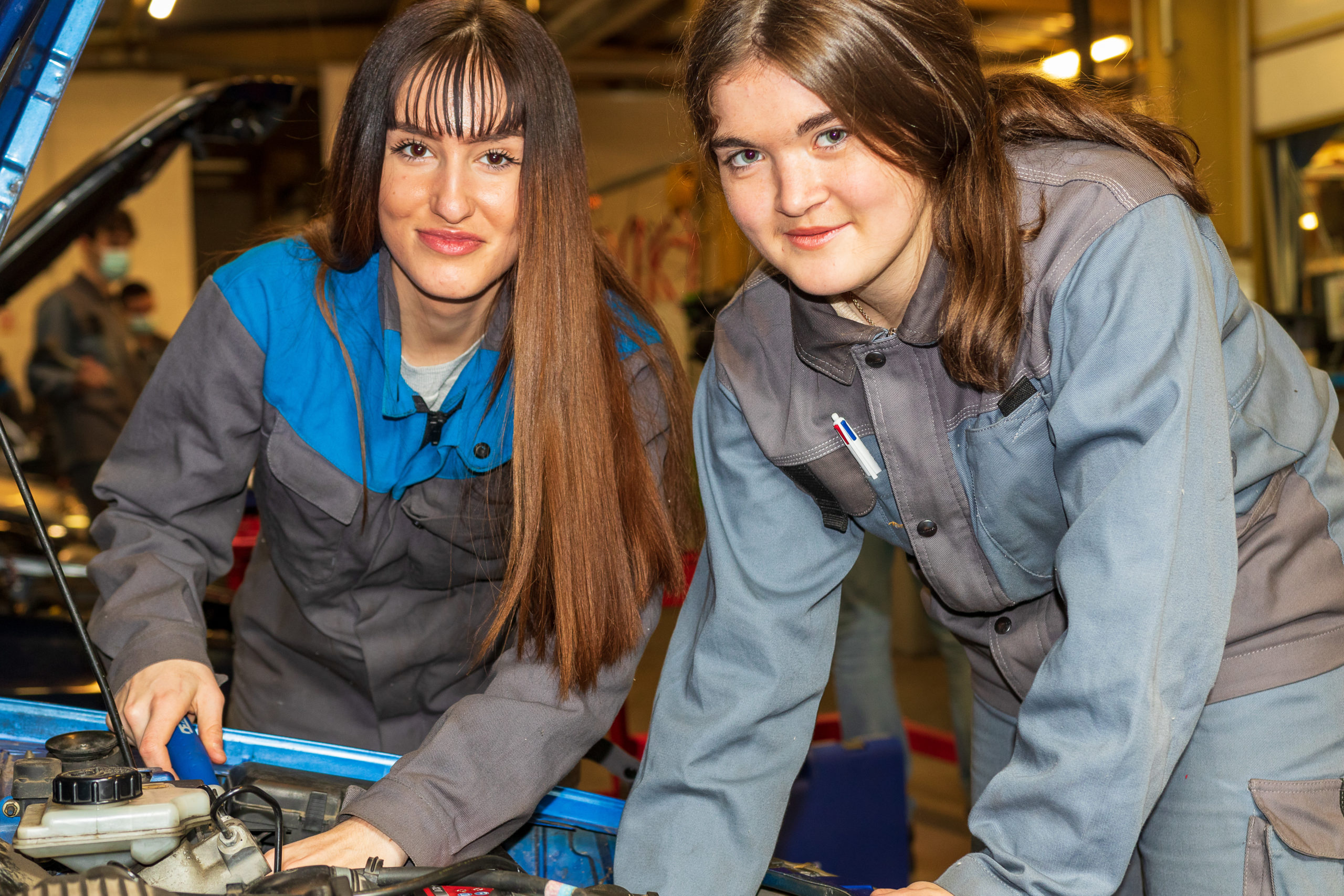
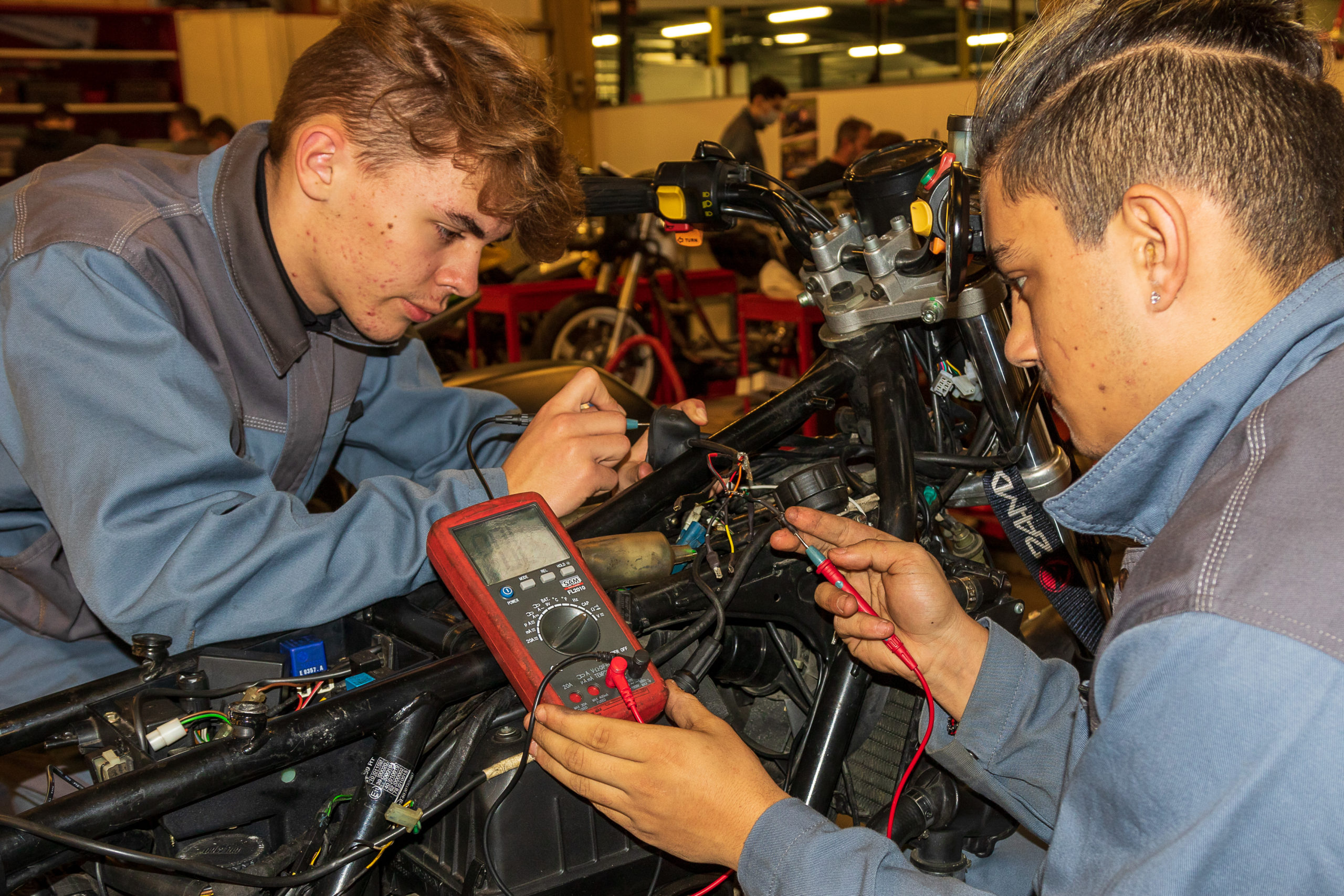
The training takes place in our technical workshops dedicated to energy maintenance trades.
Teaching methods and resources: practical exercises, real-world case studies, and comparing and contrasting activities carried out in the workplace with those conducted at the training center.
Educational systems focused on energy maintenance, positive and negative cold rooms, air conditioners, reversible air-to-water heat pumps, solar thermal collectors, oil, gas, and wood pellet boilers, cogeneration units, water treatment systems, and science laboratories
A computer lab equipped with 14 computers is available for conducting technological research.
A "traditional" classroom is also used whenever necessary.
Career paths, professions, jobs
Business sectors:
– Commercial refrigeration: maintaining the cold chain at retail locations,
– Semi-industrial refrigeration: food storage and small-scale industrial processes,
– Refrigeration systems for commercial kitchens in the restaurant and hospitality industries,
– Comfort air conditioning,
for construction, installation, maintenance, and operation services.
Types of jobs available:
Refrigeration Technician; Refrigeration and Air Conditioning Technician; Refrigeration System Operator; Refrigeration and Air Conditioning Repair Technician; Refrigeration and Air Conditioning Technician; Refrigeration Technician; Refrigeration and Air Conditioning Service Technician; Refrigeration and Air Conditioning Maintenance Technician.
Success indicators:
- Pass rate for the previous year 90.90%
- Further education NC%
- Interruption of studies NC%
- Entry into the workforce NC%
Skill sets:
The program is based on teaching methods that focus on individualized instruction.
We have chosen an educational strategy aimed at:
Tailor learning paths by offering each individual a personalized program,
Foster autonomy by empowering our trainees to take ownership of their learning,
Develop a culture of technology by integrating all components, including those related to workplace safety,
Cultivate professional attitudes, methods, and rigor.
Course phases and individualized case studies are validated by the lead instructor through collaborative work in small groups.
Practical training phases are evaluated individually by the lead instructor, who records the results in a skills portfolio.
Supervised time for tutorials and practical work is also scheduled to prepare for the certification
A computer lab is available for preparing the internship and workplace activity report, which is required to pass the CAP MV.
Monitoring procedures:
The program is based on teaching methods that focus on individualized instruction.
We have chosen an educational strategy aimed at:
Tailor learning paths by offering each individual a personalized program,
Foster autonomy by empowering our trainees to take ownership of their learning,
Develop a culture of technology by integrating all components, including those related to workplace safety,
Cultivate professional attitudes, methods, and rigor.
Course phases and individualized case studies are validated by the lead instructor through collaborative work in small groups.
Practical training phases are evaluated individually by the lead instructor, who records the results in a skills portfolio.
Supervised time for tutorials and practical work is also scheduled to prepare for the certification
A computer lab is available for preparing the internship and workplace activity report, which is required to pass the CAP MV.